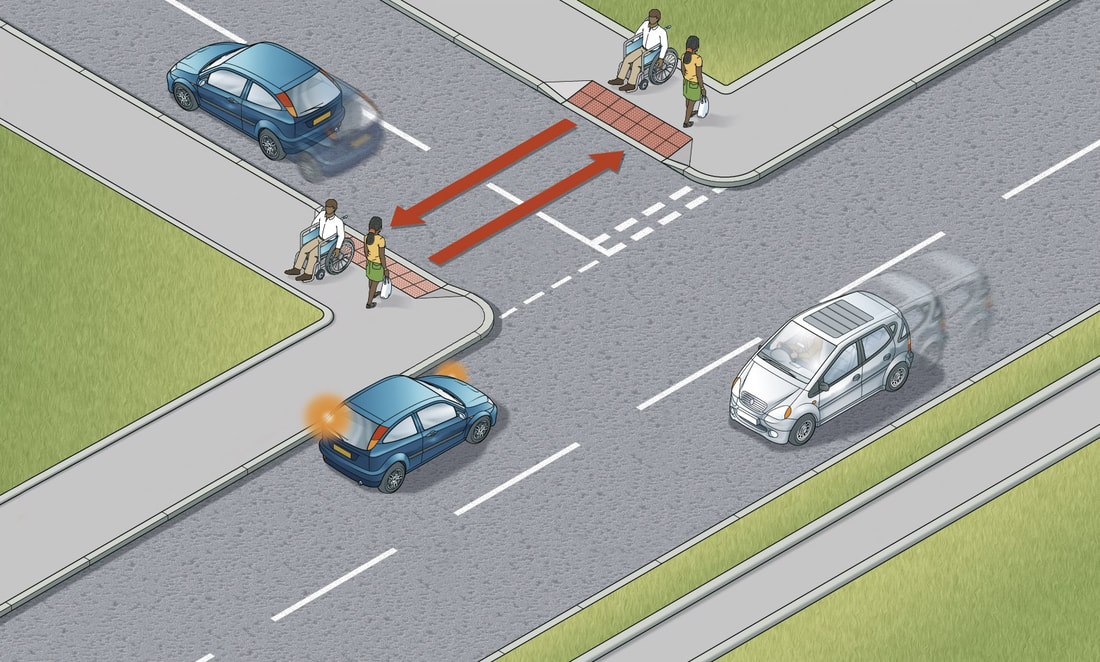
Nobody deserves to be hit by a vehicle while walking. Not when crossing a road. Not while jogging next to a highway. Not in a parking lot when carrying groceries. Never.
We bring this up because, sometimes, it is an issue that drivers prefer not to accept. After an incident with a pedestrian that typically results in severe or even fatal injuries, drivers will often claim that they had the right of way rather than the pedestrian. If you or someone you know is involved in such a situation, contact Sullivan & Galleshaw.
Is it always that the pedestrian has the right of way?
When a pedestrian has the right-of-way, cars are required to give way to them by either slowing down or stopping.
The exact situations under which a person walking has the right of way vary depending on the state’s traffic laws.
However, on a public road, pedestrians have the right of way in the majority of states at:
- A stop sign at an intersection.
- An intersection that has a walk signal and/or a red light.
- A location on a road where neglecting to give a pedestrian the right of way could put them in danger.
Additionally, pedestrians on public roads in many states have rights to the right-of-way at:
- A designated marked crosswalk away from intersections.
- A point on the road having no designated crosswalk but it is considered safe for pedestrians to cross
On a public road, those who are blind or visually impaired and walk with a cane or guide dog often have the right-of-way. Furthermore, pedestrians usually have the right-of-way in parking lots, walkways, and walking trails.
Drivers need to be conscious of the traffic laws in the states in which they drive a vehicle and should always believe that pedestrians have the right-of-way.
When do they not have the right of way?
Like all other road users, pedestrians are bound to follow the traffic laws. When a pedestrian is crossing a road where they do not have the right of way, they must give way to moving cars and only cross the street when they feel safe to do so without obstructing traffic.
There is no uniform set of guidelines regulating when pedestrians lose their right of way, as previously mentioned because state traffic regulations vary.
However, pedestrians usually do not have the right-of-way:
- At junctions where there is a no-walk signal or a green light.
- On expressways, parkways, and other limited-access roads (which pedestrians usually are not permitted to use).
In particular locations, pedestrians may also be required to give way to cars on roads without crosswalks or at crosswalks that do not exist crossings.
Right of way does not allow drivers to endanger or hit pedestrians.
Drivers who believe they have the right of way and can ignore, pass, or even hit individuals who refuse to give way to them are the taxi drivers in a specific big city. This is entirely wrong.
Regardless of who has the right of way, no car ever has the right to put a pedestrian in danger or to hit someone. Furthermore, even if a pedestrian crossed the road in mistake, they still had to give way to oncoming traffic.
This is a clear point; thus, let’s talk about it a little bit further. In addition to improving traffic flow, right-of-way rules guarantee the safety of all users of the road, not just individuals with the right of way. In public roads, the rule is who gets to go first, not who suffers injury while using it.
A potential right-of-way control violation by one individual does not grant authority to another person to initiate a collision with the violator. A driver’s right of way does not give them the freedom to pass a pedestrian in whatever way they like.
