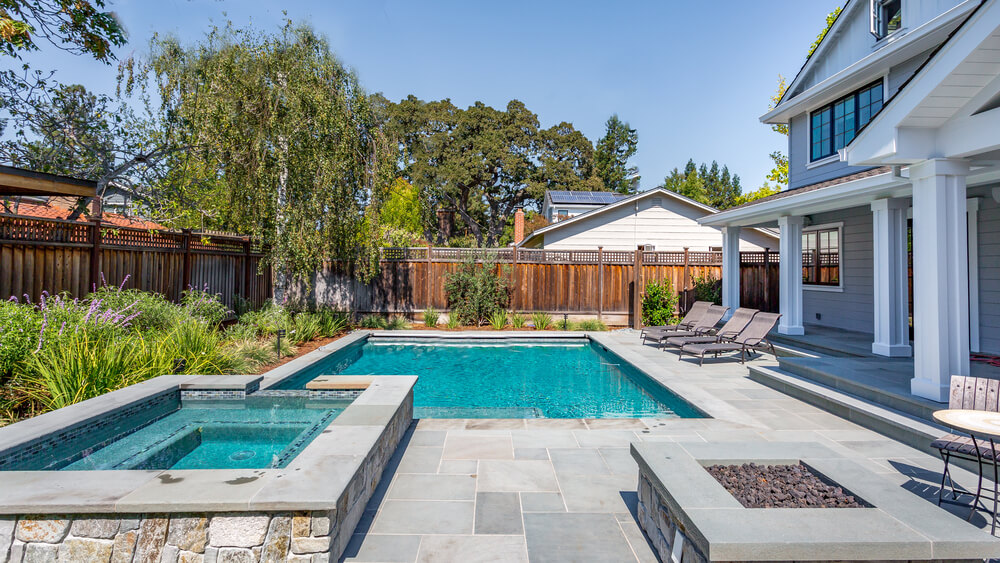
When choosing the best material for your pool deck, you must consider factors like durability, aesthetics, cost, and safety. Each material has its advantages, but some stand out for their versatility and performance in outdoor spaces. From the timeless appeal of natural stone to the modern durability of concrete, selecting the right pool decking material can elevate your entire outdoor experience.
Whether you’re building a new pool or resurfacing an old one, making the right decking choice ensures longevity, functionality, and style. This article will explore the best pool decking materials to help you make an informed decision that balances beauty, budget, and practicality.
Concrete: The Versatile Champion of Pool Decks
- Why Concrete is a Top Choice
- Natural Stone: The Elegant Option
- Pavers: A Popular, but Pricey Option
- Wood Decking: Natural Beauty with Extra Care
- Unglazed Tile: Cooling and Slip-Resistant
- Alt text image: Best Pool Decking Options
- Concrete: The Versatile Champion of Pool Decks
- Natural Stone: The Elegant Option
- Pavers: A Popular, but Pricey Option
- Wood Decking: Natural Beauty with Extra Care
- Unglazed Tile: Cooling and Slip-Resistant
- Concrete Pool Deck Ideas for In-Ground Pools
- FAQs
Why Concrete is a Top Choice
When it comes to pool decking, concrete has proven itself to be one of the most popular options due to its extreme durability and versatility. Concrete offers homeowners the flexibility to customize the look of their pool deck while enjoying long-lasting strength and low maintenance. It’s a material that can take on various textures and finishes, making it adaptable to any aesthetic style or design preference.
From smooth surfaces to stamped patterns resembling stone, brick, or even wood, concrete can give your pool area a sophisticated yet practical edge. Its versatility means you can achieve almost any look while ensuring the surface remains functional.
Concrete’s Durability and Maintenance
Concrete is known for standing the test of time, particularly in harsh outdoor environments where exposure to sun, water, and chemicals like chlorine is constant. A well-sealed and maintained concrete pool deck can last decades without requiring major repairs. Regular cleaning and resealing every few years help protect the surface from staining and wear caused by pool chemicals or UV rays.
To enhance its safety, concrete can also be textured or finished with an exposed aggregate that prevents slipping, even when wet.
Customizable Design
Unlike other materials, concrete can be customized with different finishes, colors, and patterns, allowing you to create a pool deck that complements your home’s style and landscaping. From earthy tones to vibrant hues, concrete can take on a range of colors. Additionally, the surface can be stamped with patterns that mimic natural stone, tile, or wood, providing a high-end look at a fraction of the cost.
Natural Stone: The Elegant Option
Pros and Cons of Natural Stone
For homeowners who desire a luxurious, timeless look for their pool deck, natural stone is an excellent option. Materials like travertine, limestone, and slate exude elegance and blend seamlessly with natural landscapes. Natural stone is heat-resistant and often remains cooler to the touch, making it ideal for hot summer days around the pool.
However, the downside to natural stone is its higher cost and the labor-intensive process required for installation. Each stone must be placed carefully, adding to the expense. It also requires sealing to prevent water damage, as stones are porous and can be susceptible to wear over time.
Stone Pool Deck Maintenance
Though natural stone is generally durable, it can require more maintenance compared to concrete. Stones must be cleaned regularly to prevent algae growth and discoloration from pool chemicals. A high-quality sealer must also be applied to protect the surface from water and sunlight damage.
Pavers: A Popular, but Pricey Option
Benefits of Pavers for Pool Decks
Pavers are another material frequently used for pool decks, thanks to their attractive look and easy repair process. Should one paver become damaged or cracked, it can be individually replaced without affecting the entire deck. Pavers also provide flexibility in design, with a wide array of shapes, colors, and sizes that can be arranged in various patterns.
Why Pavers May Not Be Ideal
While pavers offer many design options, they come with some drawbacks. Installation is time-consuming, requiring precise placement of each paver. They also tend to shift or pop out of place over time, leading to the potential growth of weeds in the cracks. Additionally, pavers can become extremely hot under direct sunlight, making them uncomfortable for bare feet.
Wood Decking: Natural Beauty with Extra Care
Choosing the Right Wood for Your Pool Deck
Wood decking adds natural warmth and beauty to any outdoor space. Materials like cedar, redwood, ipe, and teak are popular for their resistance to water and insect damage. Wood is particularly beloved for its organic look, which can blend beautifully with lush landscaping.
The Challenge of Maintaining Wood Decks
Despite its aesthetic appeal, wood decking requires more upkeep than concrete or stone. Without proper care, wood is susceptible to rotting, warping, and insect infestations. Regular sealing and staining are necessary to maintain its appearance and durability. Furthermore, in high-moisture areas like pool decks, wood can become slippery when wet, increasing the risk of accidents.
Unglazed Tile: Cooling and Slip-Resistant
Unglazed Tile for Pool Decks
For homeowners prioritizing comfort and safety, unglazed tile is a solid choice for pool decking. Tiles like travertine stay cool underfoot and offer better slip resistance compared to their glazed counterparts. Unglazed tiles come in a variety of textures and finishes, making them not only practical but also visually appealing.
Durability and Maintenance of Unglazed Tiles
While tiles are durable and attractive, they require careful installation to prevent cracks and shifting. Proper sealing is essential to protect them from water absorption and stains. Over time, grout lines may need maintenance to prevent weed growth or water damage.
Get LIFETIME ACCESS to “My Private Prompt Library”: https://ko-fi.com/s/277d07bae3
Focus Keywords: Pool Decking Options, Best Pool Deck Material, Concrete Pool Deck
Slug: best-pool-decking-options
Meta Description: Discover the best pool decking options, including concrete, natural stone, and wood, to find the perfect material for your outdoor space.
Alt text image: Best Pool Decking Options
What Are the Best Pool Decking Options?
When choosing the best material for your pool deck, you must consider factors like durability, aesthetics, cost, and safety. Each material has its advantages, but some stand out for their versatility and performance in outdoor spaces. From the timeless appeal of natural stone to the modern durability of concrete, selecting the right pool decking material can elevate your entire outdoor experience.
Whether you’re building a new pool or resurfacing an old one, making the right decking choice ensures longevity, functionality, and style. This article will explore the best pool decking materials to help you make an informed decision that balances beauty, budget, and practicality.
Concrete: The Versatile Champion of Pool Decks
Why Concrete is a Top Choice
When it comes to pool decking, concrete has proven itself to be one of the most popular options due to its extreme durability and versatility. Concrete offers homeowners the flexibility to customize the look of their pool deck while enjoying long-lasting strength and low maintenance. It’s a material that can take on various textures and finishes, making it adaptable to any aesthetic style or design preference.
From smooth surfaces to stamped patterns resembling stone, brick, or even wood, concrete can give your pool area a sophisticated yet practical edge. Its versatility means you can achieve almost any look while ensuring the surface remains functional.
Concrete’s Durability and Maintenance
Concrete is known for standing the test of time, particularly in harsh outdoor environments where exposure to sun, water, and chemicals like chlorine is constant. A well-sealed and maintained concrete pool deck can last decades without requiring major repairs. Regular cleaning and resealing every few years help protect the surface from staining and wear caused by pool chemicals or UV rays.
To enhance its safety, concrete can also be textured or finished with an exposed aggregate that prevents slipping, even when wet.
Customizable Design
Unlike other materials, concrete can be customized with different finishes, colors, and patterns, allowing you to create a pool deck that complements your home’s style and landscaping. From earthy tones to vibrant hues, concrete can take on a range of colors. Additionally, the surface can be stamped with patterns that mimic natural stone, tile, or wood, providing a high-end look at a fraction of the cost.
Natural Stone: The Elegant Option
Pros and Cons of Natural Stone
For homeowners who desire a luxurious, timeless look for their pool deck, natural stone is an excellent option. Materials like travertine, limestone, and slate exude elegance and blend seamlessly with natural landscapes. Natural stone is heat-resistant and often remains cooler to the touch, making it ideal for hot summer days around the pool.
However, the downside to natural stone is its higher cost and the labor-intensive process required for installation. Each stone must be placed carefully, adding to the expense. It also requires sealing to prevent water damage, as stones are porous and can be susceptible to wear over time.
Stone Pool Deck Maintenance
Though natural stone is generally durable, it can require more maintenance compared to concrete. Stones must be cleaned regularly to prevent algae growth and discoloration from pool chemicals. A high-quality sealer must also be applied to protect the surface from water and sunlight damage.
Pavers: A Popular, but Pricey Option
Benefits of Pavers for Pool Decks
Pavers are another material frequently used for pool decks, thanks to their attractive look and easy repair process. Should one paver become damaged or cracked, it can be individually replaced without affecting the entire deck. Pavers also provide flexibility in design, with a wide array of shapes, colors, and sizes that can be arranged in various patterns.
Why Pavers May Not Be Ideal
While pavers offer many design options, they come with some drawbacks. Installation is time-consuming, requiring precise placement of each paver. They also tend to shift or pop out of place over time, leading to the potential growth of weeds in the cracks. Additionally, pavers can become extremely hot under direct sunlight, making them uncomfortable for bare feet.
Wood Decking: Natural Beauty with Extra Care
Choosing the Right Wood for Your Pool Deck
Wood decking adds natural warmth and beauty to any outdoor space. Materials like cedar, redwood, ipe, and teak are popular for their resistance to water and insect damage. Wood is particularly beloved for its organic look, which can blend beautifully with lush landscaping.
The Challenge of Maintaining Wood Decks
Despite its aesthetic appeal, wood decking requires more upkeep than concrete or stone. Without proper care, wood is susceptible to rotting, warping, and insect infestations. Regular sealing and staining are necessary to maintain its appearance and durability. Furthermore, in high-moisture areas like pool decks, wood can become slippery when wet, increasing the risk of accidents.
Unglazed Tile: Cooling and Slip-Resistant
Unglazed Tile for Pool Decks
For homeowners prioritizing comfort and safety, unglazed tile is a solid choice for pool decking. Tiles like travertine stay cool underfoot and offer better slip resistance compared to their glazed counterparts. Unglazed tiles come in a variety of textures and finishes, making them not only practical but also visually appealing.
Durability and Maintenance of Unglazed Tiles
While tiles are durable and attractive, they require careful installation to prevent cracks and shifting. Proper sealing is essential to protect them from water absorption and stains. Over time, grout lines may need maintenance to prevent weed growth or water damage.
What Decking is Best Around a Pool?
When choosing the best pool decking material, there are several factors to consider: safety, maintenance, cost, and appearance. After weighing these considerations, concrete often emerges as the best all-around option. Its slip-resistant finishes, ease of maintenance, and ability to stay cool make it a standout choice for both practicality and aesthetic versatility.
Concrete Pool Deck Ideas for In-Ground Pools
Design Inspiration for Concrete Decking
One of the most attractive features of concrete is its ability to be tailored to any design. If you’re looking for inspiration, here are some ideas:
- Smooth and Modern: A minimalist pool deck with clean lines and light gray concrete offers a sleek, modern aesthetic. Simple yet elegant, this design ensures the deck stays cool in the sun.
- Stamped Concrete: For those who prefer the look of stone or brick, stamped concrete can imitate almost any material. This type of finish provides a high-end appearance without the hefty price tag.
- Textured Finishes: For an interesting visual effect, textured finishes add depth and enhance safety by creating a non-slip surface. From seamless stamps to exposed aggregates, texture can elevate your pool deck’s style.
Concrete vs. Pavers: Which is Better?
While pavers have their appeal, concrete usually proves to be the superior material for pool decks. The ease of maintenance, long-lasting durability, and customizable design make concrete the better long-term investment. Additionally, concrete is less prone to shifting and cracking when installed properly, which is a common issue with pavers.
Paver maintenance can be time-consuming, particularly as weeds and grass begin to grow in between the individual pieces. With concrete, however, cracking is minimized with proper installation techniques like fiber reinforcement and strategic joint placement.
FAQs
Is concrete the best material for a pool deck?
Concrete is widely considered one of the best materials for pool decks due to its durability, safety features, and design versatility. It offers a long-lasting and affordable option compared to alternatives like natural stone or wood.
How do I maintain a concrete pool deck?
Maintenance is simple—sweep and hose off the deck regularly, and apply a high-quality sealer every few years to protect the surface from pool chemicals and UV rays.
Can concrete pool decks crack?
Yes, concrete can crack, but these can be minimized through proper installation methods like cutting joints in strategic places and using fiber reinforcement.
Are pavers more expensive than concrete for pool decking?
Pavers are typically more expensive due to the labor-intensive installation process and the ongoing maintenance required to keep them in place.
Do wood pool decks require more upkeep than concrete?
Yes, wood requires regular sealing, staining, and inspection to prevent water damage, warping, and insect infestation, making it more high-maintenance than concrete.
Can unglazed tiles be used for pool decking?
Yes, unglazed tiles are a good choice for pool decks as they remain cool and provide better slip resistance compared to glazed tiles.
When selecting the best pool decking material, it’s essential to consider factors like safety, durability, and maintenance. While materials like natural stone, wood, and pavers offer their unique benefits, concrete stands out as the most versatile and cost-effective option. With its wide range of design possibilities, low maintenance requirements, and long-lasting durability, concrete provides the best value for your pool decking needs.
